
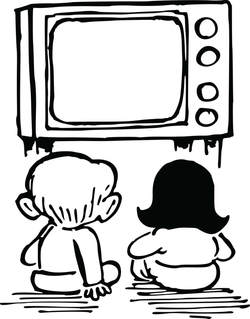
Have you ever spent hours binge-watching a show? Game of Thrones. Gilmour Girls. Portlandia. The Simpsons. Deadliest Catch. Anyone? We all have our guilty pleasures – the escape that allows us to unwind and momentarily forget about our busy, chaotic lives filled with responsibilities and endless to-do lists.
I have definitely noticed a trend toward needing this escape in our family lately, but the guilty binge-watchers are not the adults. It’s our girls. No, Games of Thrones is not on their radar. At least not yet. But they are definitely hooked, and as any cautious and over-protective parent that has been warned time and time again about the dangers that excessive TV watching has on growing young minds, I feel a bit funny about allowing the binge-fest to continue.
Shouldn’t they be outside, playing sports, having play dates, engaging in more productive activities? Or, at the very least, playing dollhouse or doing arts-and-crafts? Aren’t those the best learning experiences –ones that allow them to explore, develop their interests, build communication and social skills? And if they are lucky, even find their “passion”? If gymnastics is not in their future, surely their life-long interest in engineering will ignite after they take that new after-school robotics class.
But instead, I watch as they plop themselves on the couch in the afternoon, excitedly clutching the remote. There is a new episode of the “Kids Baking Championship” taped on DVR!
The Kids Baking Championship?? How did they even find this on TV? We are not a baking family. Sure, I’ll make the occasional banana bread, but really, who am I kidding. I am no Martha Stewart.
Yet, here we are. The girls know all the contestants, their names, where they are from, what their personalities are like, and even the difference between fondant and meringue.
Good, I tell myself. This is educational. I peek around the corner at the TV, while mindlessly leafing through the town activities brochure.
We are having what you might call “a low-key” spring. With so much time on our hands after school, the word “boredom” has entered our regular vocabulary. As in, “mom, I am so bored! What are we going to do today?”
I am not your activities coordinator, I’ll say. Go find something to do. But they have already watched all of the episodes of “The Kids Baking Championship” about 20 times, so what now?
Last week, walking home from school with my oldest, with my youngest away for the afternoon, that dreaded question came up yet again. Mom, what are we going to do??
I don’t know, I said. I am sure we’ll come up with something…should we (gasp)…bake?
“I am not a cooking girl”, she’d tell me in the past whenever I’d ask for some help in the kitchen.
But technically speaking, baking is not cooking. With its precise lists of carefully measured ingredients, it’s less improvisational than cooking and therefore, perhaps a lot less scary for a kid that’s just starting out.
So, should we? Should we bake, I say.
Yes! My girl replies excitedly.
Ok, then, we’ll have to make something all of us can enjoy. How about some gluten-free chocolate chip cookies? I think I can scrape up the ingredients in our kitchen.
They come out delicious.
“Look what we made for you”, my daughter screams when my youngest comes home later that afternoon. The smile on my baby's face is the sweetest I’ve ever seen.
The three of us sit on the couch and chow down the cookies.
And we all feel like champs.
I have definitely noticed a trend toward needing this escape in our family lately, but the guilty binge-watchers are not the adults. It’s our girls. No, Games of Thrones is not on their radar. At least not yet. But they are definitely hooked, and as any cautious and over-protective parent that has been warned time and time again about the dangers that excessive TV watching has on growing young minds, I feel a bit funny about allowing the binge-fest to continue.
Shouldn’t they be outside, playing sports, having play dates, engaging in more productive activities? Or, at the very least, playing dollhouse or doing arts-and-crafts? Aren’t those the best learning experiences –ones that allow them to explore, develop their interests, build communication and social skills? And if they are lucky, even find their “passion”? If gymnastics is not in their future, surely their life-long interest in engineering will ignite after they take that new after-school robotics class.
But instead, I watch as they plop themselves on the couch in the afternoon, excitedly clutching the remote. There is a new episode of the “Kids Baking Championship” taped on DVR!
The Kids Baking Championship?? How did they even find this on TV? We are not a baking family. Sure, I’ll make the occasional banana bread, but really, who am I kidding. I am no Martha Stewart.
Yet, here we are. The girls know all the contestants, their names, where they are from, what their personalities are like, and even the difference between fondant and meringue.
Good, I tell myself. This is educational. I peek around the corner at the TV, while mindlessly leafing through the town activities brochure.
We are having what you might call “a low-key” spring. With so much time on our hands after school, the word “boredom” has entered our regular vocabulary. As in, “mom, I am so bored! What are we going to do today?”
I am not your activities coordinator, I’ll say. Go find something to do. But they have already watched all of the episodes of “The Kids Baking Championship” about 20 times, so what now?
Last week, walking home from school with my oldest, with my youngest away for the afternoon, that dreaded question came up yet again. Mom, what are we going to do??
I don’t know, I said. I am sure we’ll come up with something…should we (gasp)…bake?
“I am not a cooking girl”, she’d tell me in the past whenever I’d ask for some help in the kitchen.
But technically speaking, baking is not cooking. With its precise lists of carefully measured ingredients, it’s less improvisational than cooking and therefore, perhaps a lot less scary for a kid that’s just starting out.
So, should we? Should we bake, I say.
Yes! My girl replies excitedly.
Ok, then, we’ll have to make something all of us can enjoy. How about some gluten-free chocolate chip cookies? I think I can scrape up the ingredients in our kitchen.
They come out delicious.
“Look what we made for you”, my daughter screams when my youngest comes home later that afternoon. The smile on my baby's face is the sweetest I’ve ever seen.
The three of us sit on the couch and chow down the cookies.
And we all feel like champs.





 RSS Feed