 Get on the elevator, fancy a job
On the seventh floor You are going to the top Stop. Doors open You are only on two In walks a woman in a suit. Looks at you Speak, your brain says. She’s important But your mouth feels numb Sticky, gooey, like you’ve swallowed gum You have only one chance to impress Or hold your peace What will it be? Fight or flight No. Surprise Calm and serenity wash over you Handshake. Release Eye contact. Hold You’ve already spoken volumes And you are only on four Then a little voice says, don’t try so hard Be yourself, and if it’s right The connection will bloom Chances are You will know you’ve made it quite soon Relax and enjoy It’s a short ride to seven So different from the work you must do To get way up to heaven
0 Comments
 When my youngest daughter was a toddler, her favorite book was “In The Garden”. We read that book every night before going to sleep, sometimes multiple times. We read it so much that she and I memorized each page. The words are still implanted vividly on my brain. “In the garden, many fruits and vegetables are growing. The orange carrot grows in the ground. I pick it and I eat it. The blueberries grow on the bush. I pick them and I eat them. The red tomato grows on the vine. I pick it and I eat it.”
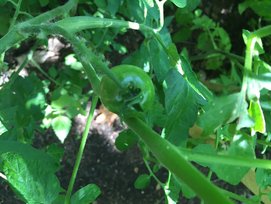
It was an unlikely favorite, considering we lived in a high rise building in the middle of a city and there were no gardens around for miles. But, who’s to say what speaks to us… She loved it and so every night we travelled together to that magical garden where many fruits and vegetables were growing. Fast forward to today. We have a house and a backyard. And now we have what you might call a small garden. It’s almost exactly like the book described. Eerie. Then again, perhaps not… As of a couple of hours ago, last I checked, there were no fruits and vegetables growing in our garden. Make no mistake, the seeds are in the ground, the plants are sprouting and happily enjoying sunshine, but…there are NO fruits and vegetables. In April I wrote a blog about starting a new hobby: gardening. An unlikely hobby for me, a city girl at heart, but one I thought I’d try on for size given my new suburban residence. The excitement of trying something new was palpable, and I dug right in, ready to get my hands dirty and learn some lessons along the way. Today I am happy to report that after three months of watching and tending, the results are quite clear: complete and utter FAILURE!!! Well, that’s what it’s feeling like at the moment, but I am trying hard not to give in to the mental melodrama. When something doesn’t go according to plan, it is certainly disappointing. Whatever our chosen pursuit, when we commit, we put in effort, blood and tears into making sure we succeed. I know I feel this way, and I am sure you do too. But, what if despite our best efforts, we do not get the results that we desire? What if after you prep the ground, water the seeds, tend and support the plants as they grow, while shooing away wild animals whenever possible, you still come up short? I guess then you are not the gardening type. QUIT. You have neither the skills not the natural ability to make it happen. My little girl asked me the other day when we’ll be picking and eating the tomatoes from our garden, and I was tempted to say NEVER. But I caught myself just in time. I don’t want to believe that story line. Instead, I’ll weave a different story. I’ll tell myself and my little girl that in our garden, many fruits and vegetables will be growing…NEXT YEAR. For now, we’ll have to gather tomatoes, and some additional lessons, from a different garden. One that grows in a land that’s not too far away, just over the rainbow, in our grandmother’s back yard. 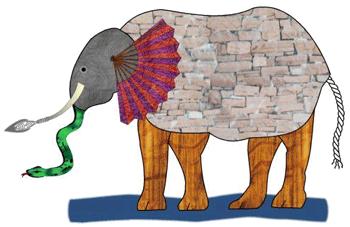 The other day, in my daughter’s bedroom, I came across a book she received as a parting graduation gift from pre-school, “The Blind Men and the Elephant”.
If you haven’t read the story, it is an old Sufi fable about six blind men who, having never met an elephant, go to the prince’s palace to find out what the elephant is like. When they get to the palace, the prince’s guard lets each of the men touch the elephant. Later, while resting, they begin to discuss what they experienced, but the discussion dissolves into an argument. The men are in disagreement about what they “saw.” The first, having touched an elephant’s side thinks the elephant is a wall. The second touches the trunk and thinks the elephant is a snake. The third and the fourth touch the tusk and the leg, and think the animal is a spear or a tree, respectively. The fifth touches the ear and thinks it’s a fan, while the last is certain the elephant is a rope, having touched its tail. Only with the help of the wise prince, who comes to help resolve the argument, are the men able to recognize the full truth – that the elephant is really a combination of all the parts they touched. There are many different interpretations to the story, but the one I keep coming across and that resonates the most, is the idea that our personal experiences are inherently limited to our own viewpoints, but that the objective truth can be discovered or understood if we open up our worldview to include the perspectives of others. At the time my daughter received the book, I thought it was a bit pre-mature. After all, what 5 year-old is able to grasp the complexity of this moral? 5 year-olds are fundamentally self-focused in their perceptions of the world around them. It is difficult for them to see things from another’s point of view. Sure enough, after she and I read the book a couple of times, it was discarded to the back of her bookcase. My daughter moved on to more exciting literature like “Captain Underpants” and “Beezus and Ramona”. I, on the other hand, have come back to it a few times over the past year, and as this season of graduations just rolled past us, I found myself thinking of it again, and starting to appreciate the foresight of the pre-school gift. These turning points remind me of the deep feelings of excitement and uncertainty as one life chapter ends and another begins. What is around the corner? What new experiences and lessons will the new chapter bring? What challenges will we need to overcome? As we move on to new life phases, from early age to adulthood, we build and deepen our understanding of ourselves and the world around us. We do it by slowly opening up our worldview to encompass that of others. My 5 year-old, who today is sure she has all the answers, will realize soon that having an inflexible, rigid approach can only weaken her ability to solve problems, and to experience life in all of its richness and diversity. Today, she has many blind spots. She has to travel a long way to see the many dimensions of life. Today, when problems and misunderstandings arise, she insists she alone is right. Today, when she has not yet faced any real life challenges, her thinking is at best cute, at worst a bit frustrating. Tomorrow, it will be profoundly limiting. Tomorrow, I hope she discovers that although she may never have all of the answers, if she learns to listen and accept others’ diverse viewpoints, she will be closer to the wisdom and truth that many of us seek to attain. And perhaps if all of us learned to do that, in our collective wisdom, we would be so much better equipped to consider life’s many clear and hidden problems, those elusive elephants in the room.  Last month, my husband and I took our girls to the American Girl store in New York. It was a holiday rush and there were crowds of people inside, parents, kids and fans browsing the collection of classic American Girl dolls.
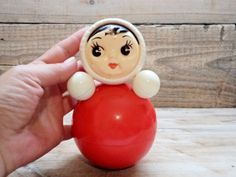
If you’ve ever been to American Girl, owned one, or just heard about it in passing, you know that it’s an empire of girl doll paraphernalia that stretches from the dolls themselves to their clothes, furniture, pets, life necessities and much much more. This kind of “whole life” approach to marketing a doll is not unique to American Girl, but what sets their dolls apart from others is that each has her own unique story and a unique persona. There is Kit Kitteridge – the girl from the 1930s who is a creative extraordinaire – she can fix anything and solve any problem. There is Julie Albright – who lives in the 70s and is a strong girl with high ideals and a bit of a feminist mystique. There is Addy Walker who lives in the time of Emancipation and stands for freedom. And there are a few more classics, along with a special “girl of the year” that American Girl introduces each year. Kids who are into dolls love American Girl. It is a popular standout – not only because each doll is beautifully made, but also in large part, I think, because with each one we get to meet a new “person”, with seemingly human qualities, needs, likes, wants and ideals. My girls have Rebecca and Saige (the girl of the year from a couple of years back) but love to see the other dolls and hear their stories. I love that these dolls can spark my girls’ imagination and get them excited about role-playing, so we make it a point to visit the store every once in a while. But what I love the most is what happens when we get back home. Newly excited, the girls pull out their dolls. But instead of playing out the script, they decide to swap their dolls outfits, move them into a different house, and assign them different roles. Rebecca is no longer the Jewish girl from New York – she is the country loving Saige who loves to braid hair and ride horses. The doll’s story becomes fluid. The fixed “persona” assigned to each doll by American Girl is no longer relevant. REINVENTION IS THE NAME OF THE GAME. The dolls suddenly come alive and become real. They are you, they are me, they stand for each of us – real people who are multi-dimensional, who can change their lives, how they see themselves, as well as adjust others’ perceptions of who they are. That is the kind of story that draws me in. This past week the world lost one of its greatest musicians and entertainers, David Bowie. A couple of days after his passing, I watched an old documentary he did with BBC where he talks freely about the role that continuous re-invention plays in his success. His reasons for living out different personas or characters on stage are not what you might imagine. He surprises by speaking openly about his discomfort with singing in front of a big audience. He talks about how his creative genius is ultimately spurred by his desire to overcome stage fright – becoming someone else gives him an opportunity to conquer his fears. In turn, this continuous re-invention allows him to bring his limitless talent to the masses and to live out his dream. This kind of mindset is not always easy to embrace, but it is often necessary to live out your full potential. And while I don’t envision a life choice as outlandish as becoming a rock star in my girls’ future, I do want them to take away the lessons that are rooted in Bowie’s story. I hope that sitting on our floor and changing their dolls’ clothes releases their imagination and makes them dream of possibilities that are not limited to what is first handed to them. I hope they learn that re-invention is not only fun, but is necessary in this life -- real life, punctuated with challenges, ebbs, flows and transitions. |



Archives
April 2019
Categories
All
|
 RSS Feed